Processing large quantities of asphalt requires a specific approach. Although asphalt itself is a relatively soft material, it is also highly abrasive and extremely sticky. The challenge lies in controlling wear and preventing material build-up inside the machine.
During the crushing process, fine dust particles saturated with bitumen—the binding agent used in asphalt—are released. These particles quickly adhere to radiators, rollers, conveyors, and other machine components. Without regular cleaning, this can lead to reduced performance, increased wear, and unplanned downtime.
A clean machine operates more efficiently, experiences less wear, and delivers higher production capacity. Through preventive maintenance and regular cleaning, unexpected shutdowns can be avoided and productivity can be maximized.
Potential Problems Caused by Insufficient Maintenance
When contamination is allowed to accumulate, the following issues may occur:
- A clogged radiator reduces cooling efficiency, resulting in a loss of available engine power.
- Dirty rollers can cause conveyor belts to track incorrectly, leading to belt damage.
- Material build-up in the crushing chamber causes accelerated and uneven wear.
- Blockages in the crushing chamber reduce the machine’s processing capacity.
Keep the Radiator Clean
One of the most important maintenance tasks is keeping the radiator clean. Due to the presence of bitumen, dust particles are drawn into the radiator and adhere to the warm cooling surfaces. Over time, the radiator can become completely clogged, resulting in overheating and reduced engine performance.
When contamination becomes severe, the radiator must be removed and immersed for several hours—or even overnight—in a suitable cleaning solution. It can then be cleaned using hot water under high pressure. Environmentally friendly cleaning products are available that effectively remove contamination without damaging the radiator alloy.
To reduce the impact of contamination, radiators with larger mesh openings are available.
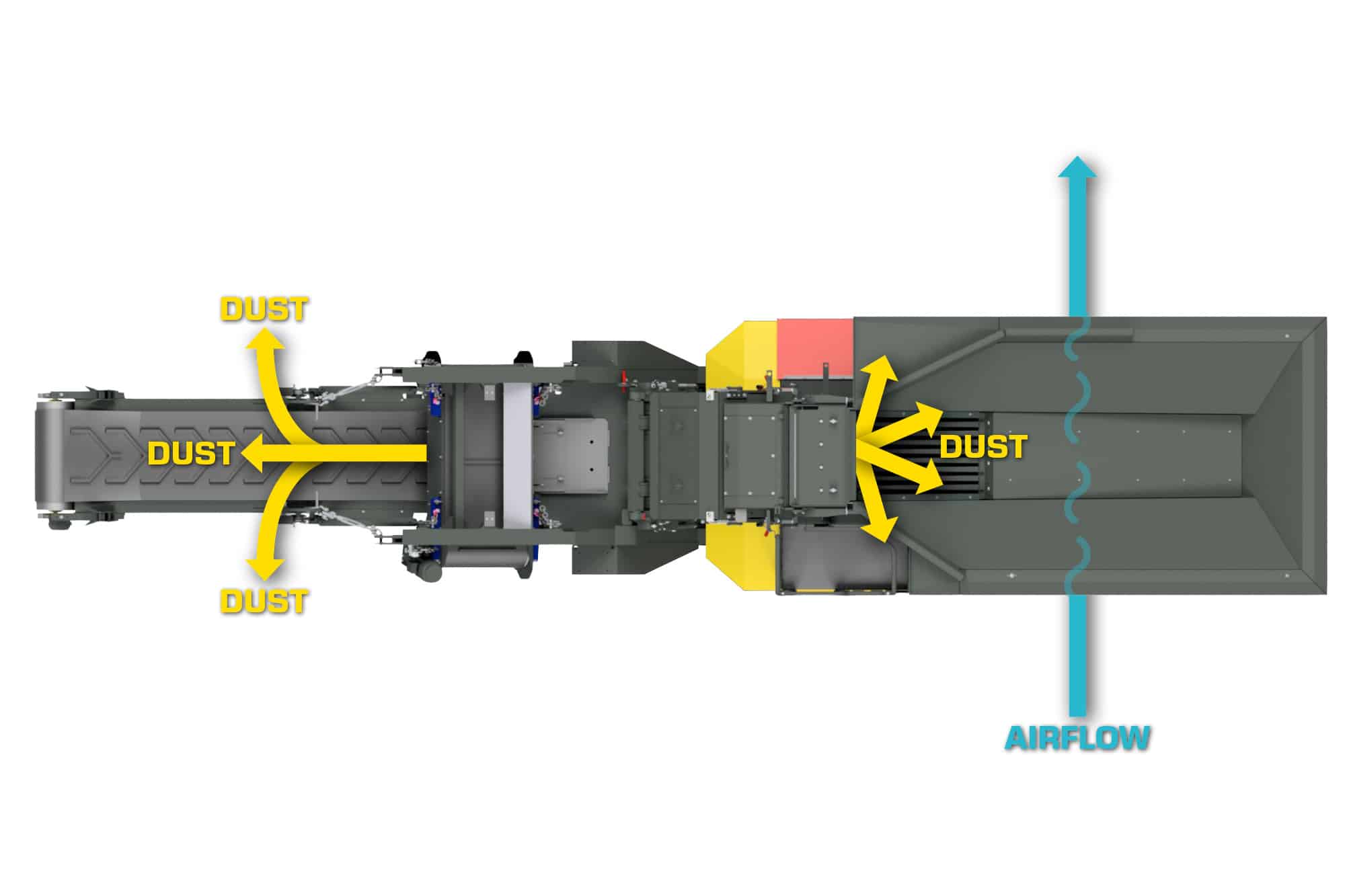
On most mobile crushers, the engine compartment is positioned above the outgoing material stream, exposing the radiator directly to hot asphalt fumes. RM crushers are designed differently: they draw air from the cold feed side of the process and discharge it out of the machine. This significantly reduces contamination of the cooling system.
Clean the Rollers Regularly
Asphalt residues accumulating on rollers can cause conveyor belts to run off-center. This not only increases wear on the belt edges but also increases resistance on the conveyor drive system.
If necessary, contaminated rollers can be replaced with a spare set. This minimizes downtime and allows the removed rollers to be cleaned thoroughly at a more convenient time. Cleaning is typically performed by soaking the rollers in a suitable cleaning agent before washing them with a high-pressure cleaner.
Be Aware of Geotextiles in Asphalt Layers
In some countries, geotextiles are used in road base layers. This material can create challenges during the crushing process.
The best solution is to use an air separator on the oversize fraction from the secondary screen. However, geotextiles can still accumulate on the screen deck, making regular inspection and cleaning essential.
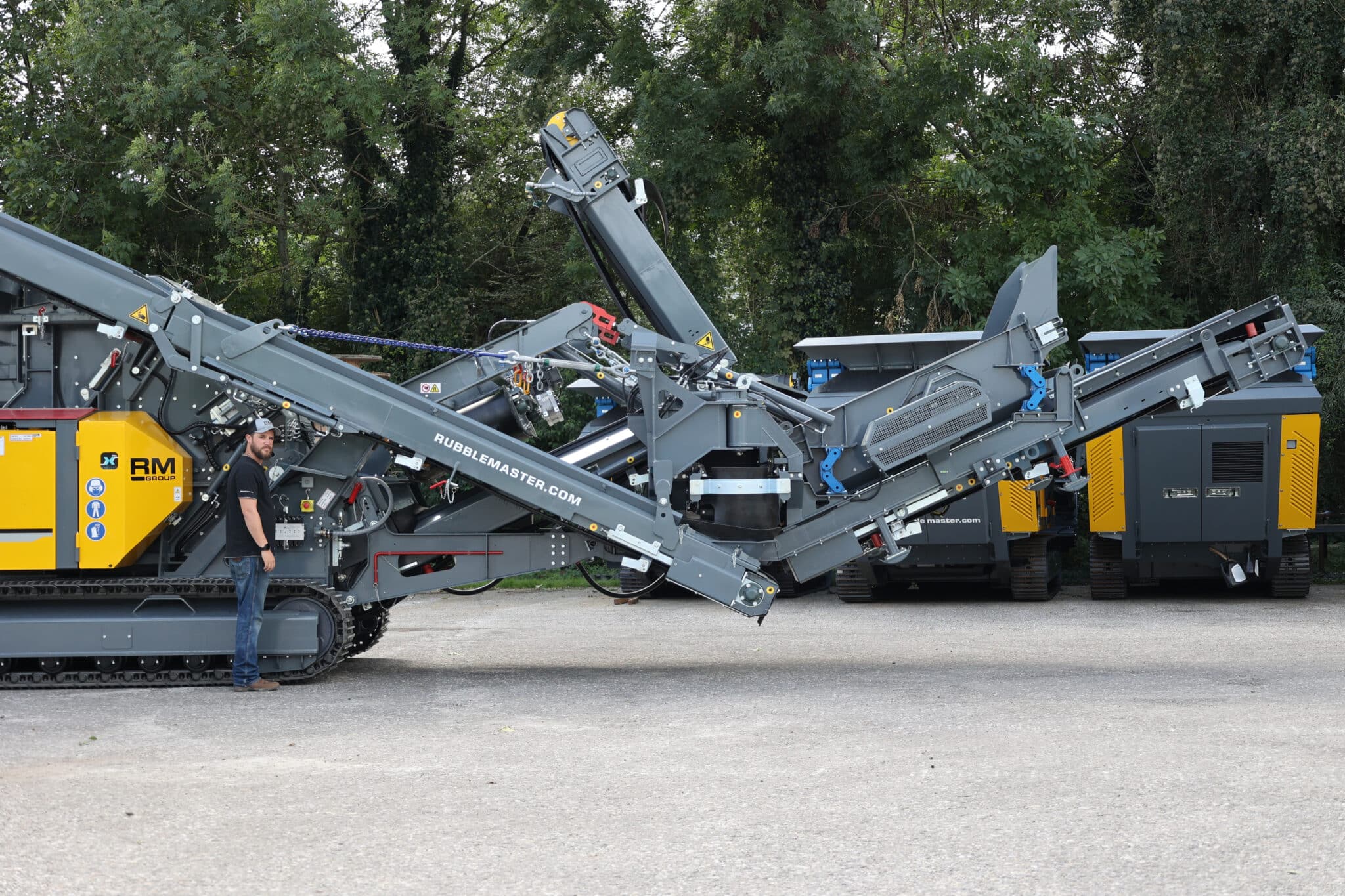
On RM crushers, the discharge conveyor can easily be folded back and the secondary screen can be lowered to the ground. This provides safe access and ample working space for maintenance and cleaning activities.
Choose the Right Screening Media
The finer the desired end product, the greater the risk of screen blinding.
For this reason, self-cleaning or flexible screen meshes are recommended. These reduce material adhesion and maximize open screening area. Stainless steel wire is also preferable, as bitumen adheres less readily to it than to standard steel wire.
Minimize Dust and Fume Generation
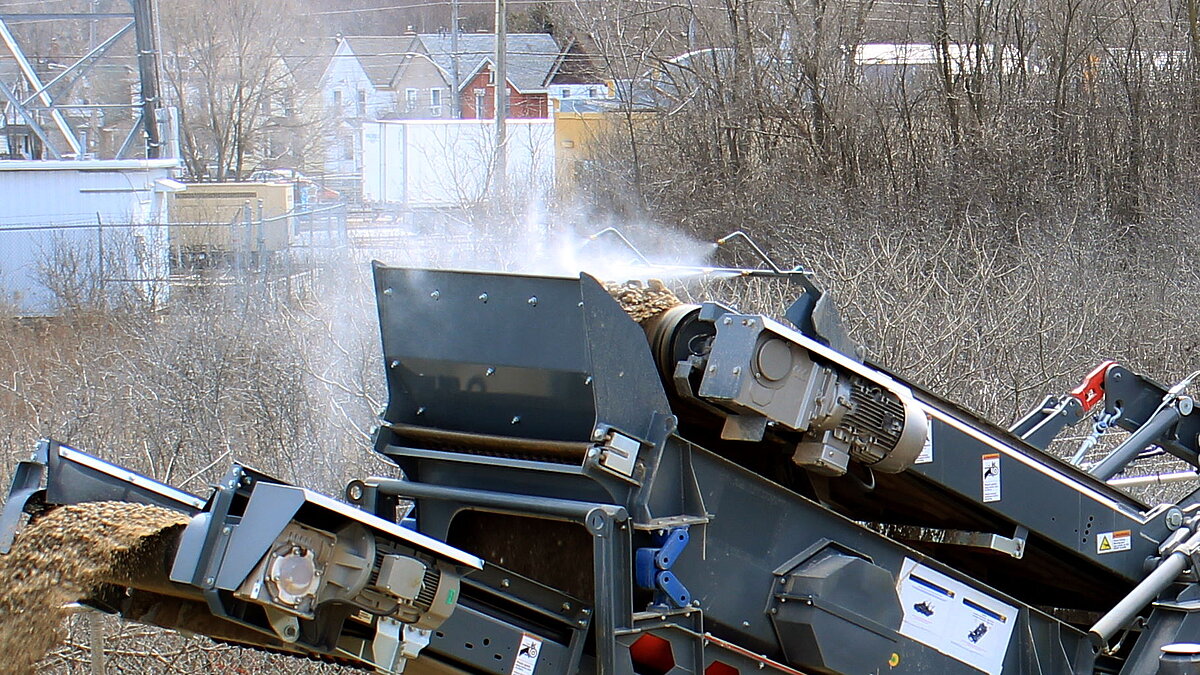
Whenever possible, the use of water spray systems is recommended. These significantly reduce the spread of dust and bitumen fumes.
Although asphalt plants are generally reluctant to introduce water—since it must later be removed from the material—a controlled and limited amount of water spray can make a significant contribution to a cleaner crushing process.
Keep the Entire Machine Clean
Not only the critical components require attention; the engine compartment and the machine as a whole should also be cleaned regularly.
Remove accumulated material preventively using compressed air and switch to hot water under high pressure when necessary. On RM crushers, several bottom plates can be easily slid out, allowing accumulated debris to be removed quickly and efficiently.
Preparation Is the Key to Success
Prepare your machine well before the asphalt crushing season begins. Thorough preparation and a few days of preventive maintenance will always be more cost-effective than repeated production stoppages.
Invest in maintenance, cleaning, and any necessary machine modifications before the season starts. Doing so will maximize the productivity of your plant while preventing costly production losses.
Consult your supplier to learn about the available solutions for optimally preparing your crusher for asphalt recycling applications.